About
What this is, who writes it, and what it is not
Looking for who writes this? About me · How this is made · Using this material · Privacy
ICU AND YOU is written on Gumbaynggirr country. I acknowledge the Gumbaynggirr people as the Traditional Custodians of this land, and pay my respects to Elders past and present. That respect is extended to all Aboriginal and Torres Strait Islander people reading this.
The programme
ICU AND YOU is a teaching programme written in a regional intensive care unit.
It began in 2023 at Coffs Harbour Health Campus, on the mid north coast of New South Wales, and it has run every week since. Each subject now sits for a fortnight rather than a week. Subscribers get two emails a week: the Friday newsletter for everyone, and, for clinical subscribers, a Tuesday one carrying the new mind map and puzzles as soon as they go up. The idea is simple enough: take one subject and come at it from several directions, on the theory that people remember a thing they have argued with, drawn, solved and laughed at rather more reliably than a thing they have been told.
Not every week produces every one of these, but most weeks produce several:
- Mind mapthe territory laid out in one page — what matters, and how the parts connect
- Aphorisma single claim worth arguing with, and a yes, no or maybe
- Superpuzzlea crossword you can fill in on screen, or print and do with a pen
- Superquizfive questions, open book, unlimited attempts, and a certificate if you want one
- Mnemonicsomething portable for three in the morning
- Medical Students' Placethe week's subject at three depths, so you can read only the tier you need
- Podcast sessiontwenty minutes worth listening to, why it is worth it, and what to take from it
- Journal cluba paper or a document, appraised rather than summarised
- The Literary Edgeone passage — a novel, a poem, a play, scripture — that shows something the clinical material cannot
- The Screening Roomfilms that know something about illness, or about the people who treat it, that is hard to teach any other way
- The India Roomthe same subject seen from somewhere with a different differential, and what colleagues who trained there already know
- Le coin français · L'angolo italiano · El rincón españolwhat other languages call the things we do, and what their words remember that ours have forgotten
- Nǐ hǎo Chinatown 你好Chinese medicine, language and practice as colleagues and families here actually meet them
- Āyubōwan Sri Lankadiseases and ways of working that are ordinary in Sri Lanka and unfamiliar here
- The Australia Pageissues that belong particularly to Australia — ancient, modern, and everything in between
- Nurses' Nest · GP Boulevard · Emergency Medicine Landing Bay · Anaesthetists' Alleythe same subject written for one audience, in their frame and about the decisions they actually make
- Procedureshow to do the thing, written because trainees keep asking and nobody is formally taught
- Drugstoredrug profiles written for two readers at once — the clinician at three in the morning and the exam candidate
- Exam focusthe college examinations, starting with the CICM First Part — the shape of them, and how people pass
- ICU Book Cluba book that changed how somebody thinks about the work — and an invitation to send me yours
- The Top Tenonce a month, the ten things from the month worth carrying away
- You askeda rolling record of readers' questions and what I made of them
- For the general publicthe same unit explained to anyone at all, with no medical knowledge assumed and any question welcome
A few of these — the procedures, the exam material, the book reviews, the monthly Top Ten — are not tied to any one subject, and sit in their own place on the landing page rather than in a fortnight.
Nearly everything carries a question, and the questions are the point. Most weeks I ask something — where the system breaks, which step would catch you out at three in the morning, what you would want within arm's reach — and the answers that come back are consistently better than the question. The best of them go into the following newsletter.
Who it is for
Nurses, registrars, students, allied health, and anyone else who finds it useful. It is written from a regional unit for regional practice, which shapes it: the assumption throughout is that the retrieval team is some hours away and the person reading is the one who has to manage the interval.
Everything here is free and always will be. If you would like to use any of it with your own team, in your own unit or your own country, you are very welcome — a note to say so would be appreciated, and I will help if I can.
The material is written for teaching rather than for citation. Where it draws on other people's work, that work is summarised in my own words and linked to the original rather than reproduced. If you think something has been wrongly attributed, or ought not to be here at all, please tell me and I will fix it the same day.
About me
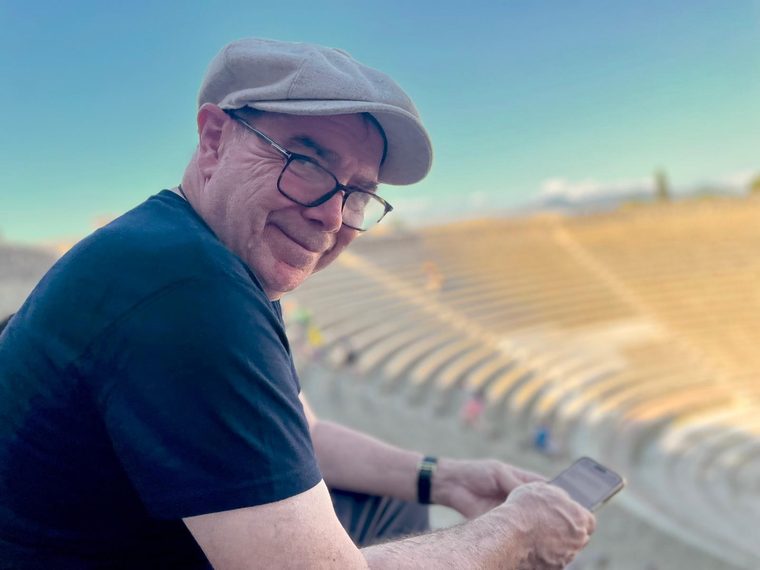
I am Michael Sutherland, a fully qualified and experienced specialist intensivist at Coffs Harbour Health Campus, Australia, where I have worked since 2001. I am the ICU Supervisor of Education and Training, and an Organ Donation Medical Specialist. Before intensive care I worked in rural general practice, anaesthetics, emergency medicine and retrieval medicine, and spent time as a ship's doctor, a flying doctor, and on a posting in Antarctica — which is where a certain interest in hypothermia comes from!
I am also a conférencier, speaking regularly at international conferences on intensive care medicine topics, and I am a published author and feature writer.
Alongside the clinical work I have a long-running research collaboration with Associate Professor Gail Moloney, from the Psychology Department of Southern Cross University, Coffs Harbour, on organ donation — specifically on the gap between what people intend and what they actually register, and on how consent conversations are shaped by the way we talk about death. That interest shows up here more than once.
One thing worth declaring, since most of this site teaches rather than persuades. The organ donation pages, and the foot of the landing page, carry a code linking to the Australian Organ Donor Register. It is there because I think it does good, and because organ donation is the subject our research group has worked on for years. The material itself argues nothing — it sets out what registering is, who can do it, that you can change your mind, and what happens if you do not — and a reader who considers it and decides against donation has been served just as well as one who registers. But you should know where it comes from, and now you do.
I speak French fluently and Italian at B1, and I am interested in languages and cultures generally — which is the entire explanation for the language columns, and for the fact that they keep multiplying. My partner is French, and we spend a good deal of our time in France and the francophone world.
Underneath all of it is the same thing: I am passionate about lifelong learning and about teaching, and I am drawn to other people who are the same. That is really what this site is — a way of finding them. I hope that I can teach you, and learn from you.
How this is made
I use artificial intelligence to help make this site, and everything on it is my responsibility. If something here is wrong, it is wrong because I published it. That is the whole of the accountability and there is no part of it I want to share.
It seems better to say this plainly than to let you work it out. You probably would: a turn of phrase, a diagram, a piece of formatting that is tidier than a busy clinician has any business producing on a Tuesday night. Some of you will notice from time to time, and I would rather you already knew.
What it is used for. Drafting and restructuring text. Building the pages themselves — the layout, the interactive crosswords, the code that assembles this site. Drawing the illustrations, which are made from scratch rather than taken from anywhere. Finding sources, checking figures against them, and arguing with me when I have remembered something wrongly.
What it is not used for. Deciding what belongs in a teaching document, or what matters clinically, or what is true. Those remain mine. No reference appears here that has not been checked to exist and to say what it is claimed to say. No page is published that I have not read.
The failure mode worth understanding is this: an AI is fluent when it is wrong. It does not hesitate over the dose it has half-remembered, or trail off before a citation it has invented. A human expert usually feels the edge of their own knowledge; the machine frequently does not. Everything on this site is therefore checked by a person who does, and that person is me.
It has already caught things. It will not have caught everything, which is what the corrections page is for.
I am a clinician, a teacher and a curator of things I think might be useful to people at very different stages of their own journeys. The tool is remarkable and it makes mistakes, and so do I. Between us we try to make fewer.
Using this material
Everything original on this site is shared under a Creative Commons Attribution–NonCommercial–ShareAlike 4.0 licence. In plain terms, and without needing to ask me:
- Use it. Copy it, print it, put it on a noticeboard, project it in a tutorial, adapt it for your own unit, translate it. Take the crossword to a teaching session and hand it round.
- Credit it. A line is enough — ICU AND YOU, icuandyou.com — and a link if the format allows one. If you have adapted something, say so, so that any errors you introduce are not laid at my door and any I have made are not laid at yours.
- Keep it free. Not for commercial use, and anything you build on it carries the same licence. If you want to use it in something that charges a fee, write to me — the answer is very often yes.
Two things are outside that licence. The logo belongs to its designer and is not covered. And material from other sources — papers, guidelines, podcasts, other institutions' documents — is summarised here in my own words and linked to the original; the underlying work remains the property of whoever made it, and their terms apply, not mine.
If you do use any of this somewhere, I would be delighted to hear about it. That is not a condition, just a request — knowing where the material has travelled is one of the pleasures of doing it.
Privacy
This site is deliberately built to collect as little as possible.
Visits. Page visits are counted using GoatCounter, which uses no cookies, sets nothing on your device, and does not collect or store personal information. It tells me which pages are being read and roughly where in the world from — nothing that identifies anyone.
The mailing list. If you subscribe, your email address is held by Direct Mail for the sole purpose of sending you ICU AND YOU. It is never sold, shared or used for anything else. Every email carries an unsubscribe link, and using it removes you immediately and permanently. You are welcome to write and ask me to remove you instead.
What you send me. The challenges and quizzes open an ordinary email to me — nothing is transmitted from the page itself, and nothing is stored anywhere on this site. I read everything that arrives. I sometimes quote the most interesting replies in the newsletter, and when I do I quote them anonymously unless you have told me you are happy to be named. If you would rather something you have sent was not used at all, say so and it will not be.
Please do not send patient information. Replies come by ordinary email, which is not a secure channel, and nothing here is a clinical record. Keep it general: that is what makes the answers useful anyway.
A note on what this is not
This is teaching material — discussion, argument and memory aids. It is not a clinical guideline and it is not a protocol.
While I make every effort to verify each fact and claim, to cite the source it came from, and to correct anything found to be wrong, medicine moves and errors are possible. Doses, thresholds and recommendations change, and a mind map is a summary — which means by definition that something has been left out. Nothing here overrides your local policy, current national guidance, or the specialist service you would ordinarily call. Check everything against your own formulary and your own protocols before you act on it.
Nothing here should be acted on without independent confirmation from a current, authoritative source, and senior advice where the situation warrants it. This site is offered freely and in good faith as education. The responsibility for any clinical decision rests entirely with the clinician making it.
Where a question is genuinely contested, or the evidence behind a recommendation is weak, I try to say so rather than smooth it over. That is usually the most interesting part of the subject and it is certainly the most useful thing to know.
When something here does turn out to be wrong, it is fixed and the fix is recorded openly on the corrections page, with what the page used to say. If you find an error, please tell me.
About the patients. No page here describes an identifiable patient. The clinical scenarios are constructed for teaching. Most are entirely fictional; where something is drawn from practice it is stripped of anything that could identify a person, and it is often an amalgam — features of several cases combined so that what remains illustrates a principle rather than a patient. If you think you recognise someone in these pages, what you are recognising is a pattern, which is rather the point of teaching material.
Whose views these are. The views expressed here are my own. They are not the policy or the position of NSW Health, the Mid North Coast Local Health District, Coffs Harbour Health Campus, the Australian Organ and Tissue Authority, the Organ and Tissue Donation Service, or any university or college I am associated with, and nothing here should be read as speaking for any of them. That matters more than it might sound: in several places this site argues against received practice, and where it does, the argument is mine to defend rather than anybody else’s to answer for.
Get in touch
Corrections, disagreements, requests for a topic, or a note to say you are using the material somewhere else — all welcome, and all read.
icuandyou@icloud.com · icuandyou.com